Tags
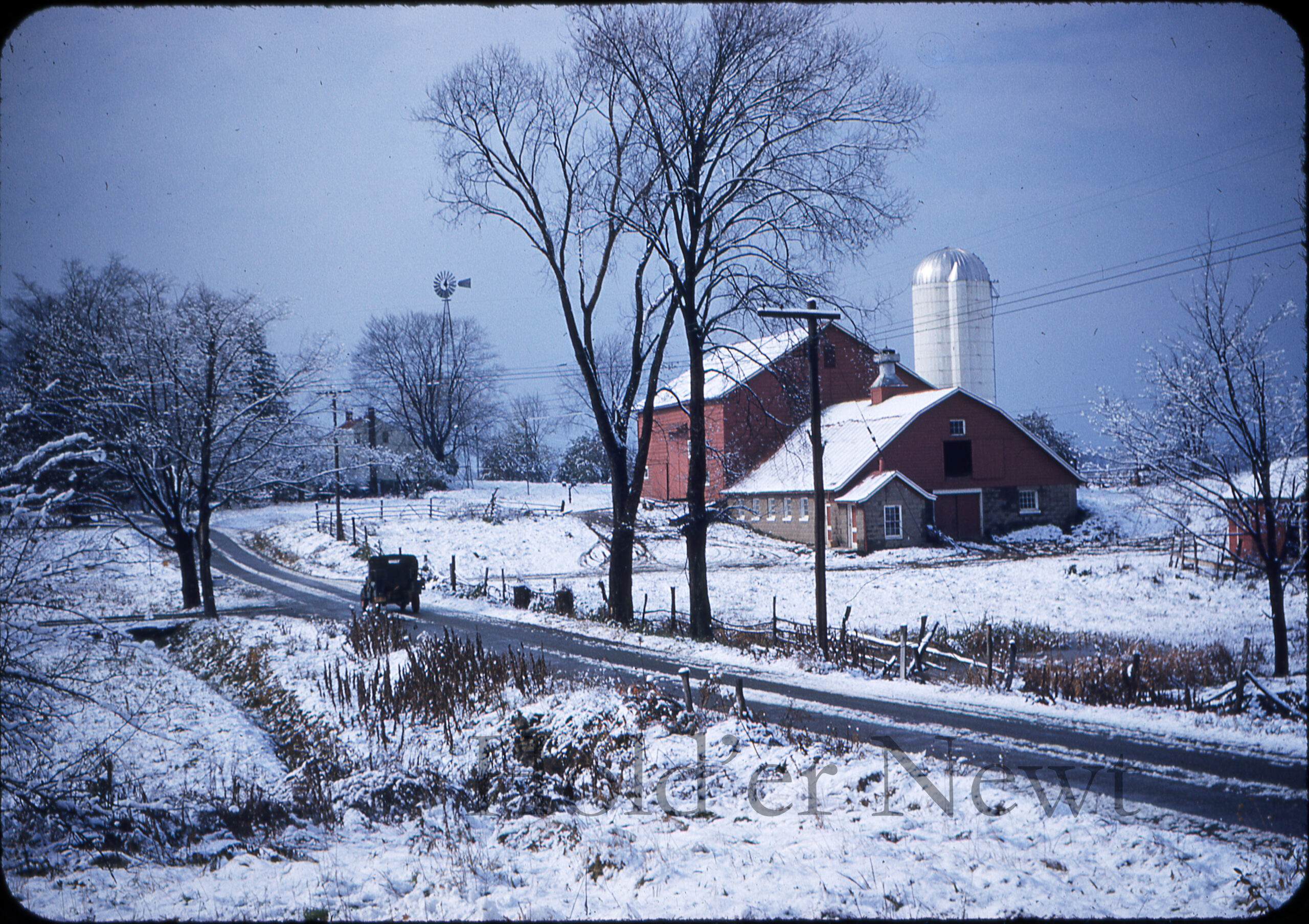
Think Cold Thoughts
18 Tuesday Aug 2026
Posted in 20th Century, Color Slides, Farming
18 Tuesday Aug 2026
Posted in 20th Century, Color Slides, Farming
Tags
07 Wednesday Jul 2021
Posted in 20th Century, Books
I’m wrapping up the 1903 Jackson Corners Signature Quilt book hopefully by the end of the year.
I’m also working on a small booklet about the Red Hook Methodist Cemetery on Cherry St., TBA
And since 2012 I’ve had The Illustrated Life & Times of John Losee of Upper Red Hook on the backburner.
Once the Jackson Corners book is in my hands, I’ll pick the Losee book back up.
Happy Birthday, Grampa!
31 Thursday Aug 2017
Posted in 19th Century, 19th Century Photos, 20th Century, Art, Genealogy
Tags
[Updated with some new information, 6/18/21]
Among the documents, photos, and books I inherited from my grandmother, Clara Losee, were a handful of Victorian miniature paintings created by a woman called “Mrs. M. J. Manier”.

The paper is only 2″ wide. “Above, below, where e’er I gaze, Thy guiding finger Lord I trace” from a hymn “…Lord I view traced in the midnight planets’ blaze”
On the reverse of her carte-de-visite, Clara’s mother-in-law Rosalie Fraleigh Losee had written: “Mrs. M.J. Manier who was an adept at painting flowers in water colors & who decorated the wedding cake for Lucy Irene Curtis when she married John A. Fraleigh June 14, 1871 & who decorated he cake for their daughter M. Rosalie when she married Harvey Losee, Sept. 5, 1906.” Included in the collection are a calling card, her photograph, a larger painting in the pages of a Victorian friendship album, a tiny framed painting, a little packet that unfolds to reveal a Christian verse, and a painting backed with ribbon (perhaps a bookmark) with a Christian verse.
Her work is beautiful but until recently, I didn’t really know who she was. Fortunately, in 1900, she was living in Red Hook with her sister, so the data started to link up to pull her story out of the past and into the light.
Mary Jane Moul was born in June 1832 to Philip Moul and Christina Shook of Red Hook. Her parents married 1 Feb 1816 at the Reformed Church in Upper Red Hook–the same that Rosalie Fraleigh Losee and her family attended. The Curtis and Fraleigh families, however, we Methodists.
Mary Jane married William Manier born in 1817–a man 15 years her senior. They had two children, John born c. 1851 and William C. born c. 1854. William died sometime before January of 1854 when John Curtis of Red Hook wrote on 9 Jan 1854 about deaths that had occurred in last two years in his diary:
…and there followed Mr. Manier; in the midst of life and health, he sickened and died. His young wife and child disconsolate. He discovered his errors in time to secure his portion in Heaven.”
Her sons were both clerks throughout their lives. John married Sophie Smith and removed to Binghamton, NY. They did not have any children. John died in 1926 in Binghamton. William C. married Jessie H Lord and had one child, a daughter whose tombstone simply reads “Baby Lu”, died 1 Jan 1885. They are all buried in the Cemetery of the Evergreens in New Lebanon, Columbia County NY.
In 1850, Mary Jane and her husband lived with her parents and sister Hannah (20 Oct 1820-9 Jan 1904, then the widow Shook) and her son Lorin Shook in Red Hook. In 1860, Philip and William had both died and Hannah and Lorin moved out. Lorin was old enough to be on his own (he married after 1860 Harriet Hermance) and Hannah remarried, possibly Isaac Cookingham. This was the same household situation in 1870. According to the New York State census of 1875, Mary Jane and her sons who were in their early 20s moved to Binghamton, they had a domestic servant in the home as well. Also residing there was Alexander Manier and his family, who appears to have been a brother to her late husband William. He, his wife and children, and Mary Jane’s son John and his wife are buried in the Spring Forest cemetery in Binghamton.
In 1897 Robert W Manier of Binghampton made a request to the people of Rhinebeck in the local paper looking for info on John Manier from Dutchess County who served in the Revolution and his son John Manier of Rhinebeck who was a member of “Captain Obadiah Titus’ company, Delamater’s Regiment of New York Militia” in the war of 1812. He was doing family history research. Robert’s father was James W, son of Alexander, son of John Manier. It is likely that the John Manier in the War of 1812 he was interested in was his great-grandfather (and William Manier’s father).

Initials R.C. – label on reverse reads “nee Canfield” or Lucy Curtis’ mother, Rachel Canfield Curtis.
In 1880, Mary Jane and her family were still in the same location, but then with John’s new wife Sophia Smith and her mother Jane W Smith. Son William had moved out. I couldn’t find her or son William in 1892, but in 1900 Mary Jane is back with her older sister Hannah (also listed as a widow) in Red Hook. Hannah died in 1904 so in 1910 Mary Jane got shuffled around again, going to live with her son William and his wife Jessie in Brooklyn. William died 7 Dec 1912 and Jessie died 30 Jan 1919.
Mary Jane Moul Manier died 13 Mar 1917 in Binghamton (probably having had to move yet again to be with her son John after son William’s death) and is buried in the Lutheran cemetery in Red Hook with her husband, sister, and parents.
BURIED AT RED HOOK The remains of Mrs. Mary J. Manier who formerly resided in Red Hook, and who died in Binghamton, March 13 were brought to Red Hook on Thursday afternoon and buried in her plot in the Lutheran cemetery. She was 85-years of age, She leaves one son, John Manier, of Binghamton.
– Hudson Evening Register 14 May 1917
22 Thursday Jan 2015
Posted in 19th Century Photos, Education, Genealogy
Born April 1825 in NY, she might have been a daughter of Eldad Jackson of Ithaca, NY called “Delia” when younger, but there is nothing to prove this.
1860 Red Hook Journal article mentions a “private school” kept by “Miss Jackson” and in 1877 her “virtues as teacher of the Primary School are above comments.” In 1879 she taught at the public school and in the early 1880’s she taught “Sabbath” school at the Red Hook Methodist church. While she was a teacher, she resided with the John and Jane Curtis family in Red Hook in 1860 and 1870. In 1880 she boarded with Misses Mary, Gertrude, and Charlotte Benedict in Red Hook.
On 7 Oct, 1884, she left Red Hook for Indian Territory “having accepted a position as teacher in Spencer Academy, and Indian Mission School of Choctaw Tribe.” She spent two years out there and returned in the fall of 1886. The Spencer Academy was in what would be Choctaw Co, OK. It had reopened in 1882 but shut again in 1886, which, presumably is why Cordelia came home.
The Choctaw, one of the Five Civilized Tribes of the southeastern United States, wanted to have their children educated. In fact, they placed a high priority on education before and after their removal to the Indian Territory (present Oklahoma) from 1831 to 1834. They saw education as necessary to survive in the white world that was encroaching upon them. Choctaw principal chief Isaac Garvin (1878-80) declared, “I say educate! Educate! Or we perish!”
– Oklahoma Historical Society’s Encyclopedia of Oklahoma History and Culture
In the Red Hook Journal of 2 May 1890 th
ere is a mention that she was from New York, formerly from and visiting friends in Red Hook. She’s a “visitor” in the home of John and Susan Van Home in Manhattan in 1900. How they knew each other is a mystery, but she was 65 years old and was probably retired from teaching at that point. She died 10 Mar 1905 at the home of Herbert Jackson Curtis (the author’s g-grandmother’s brother) and is buried at the Methodist Cemetery in Red Hook with the Fraleigh and Curtis families.
13 Monday Aug 2012
Posted in 20th Century, Genealogy
Tags
books, John Losee, Losee, red hook, rutgers, The Illustrated Life & Times of John Losee of Red Hook
Recently, my aunt Jan was cleaning and discovered a box that had belonged to my grandmother Clara Losee full of Losee genealogy notes, original source documents and the most precious thing I have found so far: “My Story” as written by my grandfather, John Losee.
When I started doing research and going through what I had, my mother said that this short autobiography existed but I couldn’t find it. We feared it to be lost.
It is 65 pages typed single space and is pretty comprehensive and surprisingly interesting for a story about a man who was born and died in Red Hook.
After scanning the document and converting it to text I am now editing the conversion (some of it came out greeked) and at about halfway through I realized I have a photograph for just about every detail he describes. Some of the images in the collection now make sense in context of the story. Just a few days ago I decided I should make a book…

The working title is “The Illustrated Life & Times of John Losee of Red Hook”. What I have envisioned sounds like a lengthy and daunting process, but I think it’s too good to pass up. The above snapshot is indeed of Grampa Losee c. 1933 lying on a rail road track with a lantern by his head.
Here’s one of the more eyebrow-raising excerpts from the manuscript about goofing around while attending Rutgers (1925-1929):
He was rushed to the hospital for emergency treatment and came back with his hand and face bandaged. He was treated to free drinks at a local speak-easy for the next two weeks while the bandages were on. Here ended the bomb making. Much later I learned that the New York State Conservation Department experimented with the mixture to fire trapping nets for bird-banding but abandoned it because it was too sensitive to detonation!
The c.1925 chemical burn victim above was his roommate Phil, who I now know is the same Phil who was setting decoys on the Hudson in 1940 in this favorite image. If you blew your roommate up in your dorm room today, you’d be booted out of school and his family would sue you out of existence. Not only did Grampa complete his degree at Rutgers, the roommate became his hunting partner! Sort of makes me pine for a less litigious time.
27 Tuesday Mar 2012
Posted in 20th Century, Apple Farming, Color Slides
Tags
apples, farming, John Losee, kodachrome, Losee, photography, red hook, upper red hook
It’s already 30 degrees and heading down to the high teens tonight. This is normally not a problem for our local fruit growers, like my cousins in Red Hook, but due to the freakishly warm weather earlier in the month, the trees have begun to bloom already. It’s only one night, but it could be devastating to the fruit crop.
In the past, orchards in danger were sometimes protected by smudge pots, as my grandfather did for his apples in the 40s. You can read more on what smudge pots were here at Wikipedia.
From the looks of them, they were most certainly DIY and not exactly safe…
I hope the blooms make it through this frosty night!
20 Tuesday Mar 2012
Posted in 20th Century, Genealogy
Tags
Fraleigh, John Losee, kodachrome, Losee, photography, red hook
“Aunt Fanny Telephoning” by John Losee, December 25th, 1940
Pictured are Rosalie Fraleigh Losee on the left and Fanny Keyes Elmore Fraleigh on the telephone, probably at Rose Hill Farm in Red Hook, but possibly at the Thomas/Losee house in Upper Red Hook. My guess is Rose Hill, because there is a lot of paperwork in the secretary behind Fanny. Rosalie’s husband Dr. Harvey Losee had been dead for nine years when this photo was taken so I imagine that the farm would have generated the papers, not a widow in a house by herself.
02 Friday Dec 2011
Posted in 20th Century, Color Slides
Tags
annandale, bard, blithewood, John Losee, kodachrome, photography, red hook

“Zabriskie Mansion” November 23rd, 1942 by John Losee
This photo was taken of the mansion in Annandale-on-Hudson, NY while it still belonged to the family and before it was used by Bard College. I was confused at first because the name Zabriskie didn’t ring any bells and I thought that Grampa must have taken this picture from his beloved Cruger’s Island (just North of Bard) and mistook this for Ulster County. Then I googled “Zabriskie mansion” and the light went on.
“In 1899 Captain Andrew C. Zabriskie, a cattle breeder, numismatist, and antiquarian, purchased the estate and retained Francis Hoppin, an alumnus of the architectural firm McKim, Mead & White, to design a manor house and garden. Hoppin produced a house in an eclectic, grand style, blending architectural and decorative elements from centuries of English mansion design with the latest turn-of-the-century technology. Captain Zabriskie’s son donated the estate to Bard College in 1951.” – Levy Institute/Bard College
Click here for Google maps to see exactly where it is.
01 Thursday Dec 2011
Posted in 20th Century, Apple Farming, Color Slides
Tags
“Cider Sign” September 19th, 1941 by John Losee
The image directly before this one is labeled “Denino’s Cider Mill”. Whether this sign is for part of Denino’s operations or not is uncertain. I’ve googled but come up empty handed as to exactly where this was, but judging by the other images on the roll, it could not have been far from Red Hook, NY.
Grampa would take his culls (apples that had some defect found after picking and could not be sold as-is) to be processed into cider. See the earlier post “Picking Kings” showing a pick up truck loaded with drops and Grampa’s dog, Amos in the driver’s seat.
12 Saturday Nov 2011
Posted in 20th Century, Color Slides